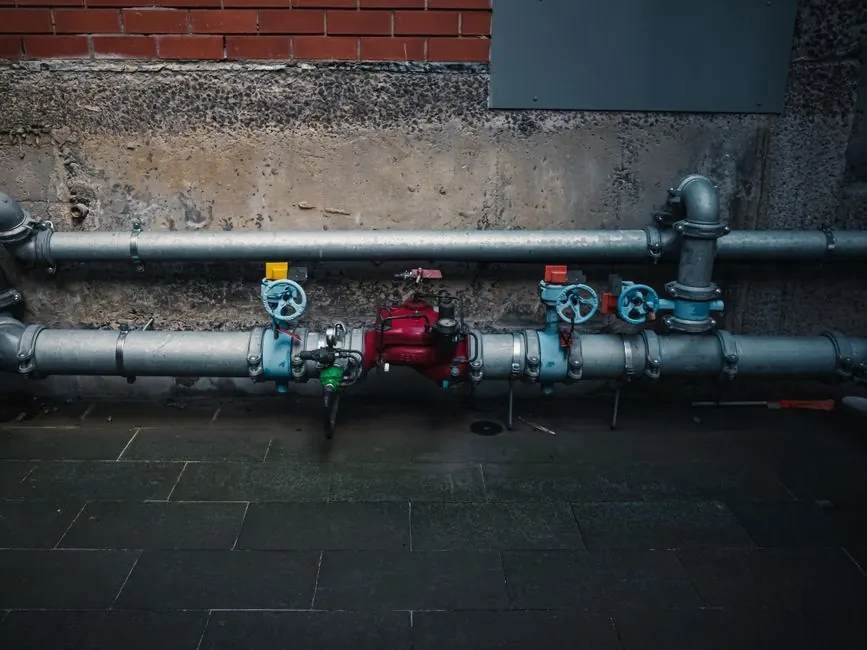
Thaw a frozen pipe by warming the air around it - a hair dryer, a space heater, or towels soaked in hot water - starting at the faucet end and working back toward the freeze. Never use an open flame, and never pour boiling water directly on a pipe. If you can see bulging, split seams, or water already pooling, the pipe has burst and thawing it will only make the flooding worse.
Berwyn's housing stock makes this a real winter problem. Most of the city's bungalows and two-flats went up between 1900 and 1930, and a lot of them still run original galvanized supply lines through unheated crawl spaces and along exterior walls. When the temperature drops into the single digits, those pipes freeze first. Here's how to thaw them without turning a $200 repair into a $6,000 water damage claim.
Why frozen pipes are a Berwyn problem every winter
Berwyn sits in a band of the Midwest that sees sustained sub-freezing stretches from late December through February, and the wind coming off the open corridors along Ogden and Cermak pushes wind chills well below the air temperature. Pipes in exterior walls, unheated basements, and crawl spaces freeze when the water inside drops to 32°F and stays there for several hours.
Water expands about 9% when it turns to ice. That expansion is what splits copper and cracks galvanized steel - the ice itself doesn't break the pipe, the pressure between the ice block and the closed faucet does. A pipe can hold up to 2,000 PSI of internal pressure before it fails, and residential lines are only rated for 40 to 80 PSI. That's why a pipe often looks fine while frozen and then sprays the moment it thaws.
We see the same addresses every January. Homes in Burst Pipe Repair in South Berwyn with north-facing kitchen walls are especially vulnerable because those walls get no sun and sit against unheated porches. If your kitchen faucet slows to a trickle on a 5°F morning, that's your warning.
How do I know a pipe is frozen and not already burst?
A frozen pipe shows three signs: no water or a trickle at one fixture, a faint bulge or frost line on the pipe itself, and a gurgling or knocking sound when you tap the wall. A burst pipe shows water - on the floor, in the ceiling, or dripping from a wall - and that changes everything.
Check these before you plug in a heater:
- Turn on the faucet. If nothing comes out, the blockage is upstream. If a trickle runs and then stops, the freeze is close to the fixture.
- Look for moisture. Any wet drywall, stained ceiling, or puddle near the suspected pipe means it has already failed. Shut off the main and call us.
- Feel the pipe. A frost coating or a visible bulge between two fittings is a freeze point. A split seam or pinhole leak is a burst.
- Check the neighbors. If your next-door neighbor on the same block has water and you don't, the problem is on your side of the meter.
If you confirm a burst, don't thaw it. Shut the main valve, open the lowest faucet in the house to drain the line, and get a technician out. Our Emergency Burst Pipe Repair Berwyn IL team handles those calls around the clock, and stopping the water is always the first step.
The safe order of operations for thawing
Thaw from the open faucet back toward the freeze, not the other way around. If you start at the ice block, the melting water has nowhere to go and the pressure spike can split the pipe you're trying to save.
- Open the faucet first. A dripping faucet relieves pressure as the ice melts and gives you a signal the moment flow returns.
- Start at the fixture end. Warm the pipe closest to the faucet, then move toward the frozen section in six-inch passes.
- Use gentle, moving heat. A hair dryer on low, a space heater pointed at the wall cavity, or towels wrung out in hot water all work. Keep the heat source moving so no single spot gets above 140°F.
- Work in 10-minute cycles. Heat for ten minutes, then feel the pipe. If it's still hard and cold, keep going. If it's warm and you still have no flow, the freeze is further down the line.
- Watch for the first trickle. When water starts to run, let it run for two to three minutes at full open to flush the line and confirm there's no leak behind the wall.
If the pipe is behind a finished wall, cut a small access hole rather than cranking the thermostat to 90°F and hoping. Whole-house heat takes hours to reach a wall cavity and risks cracking plaster in these older homes. A targeted approach is faster and cheaper.
What should I never use to thaw frozen pipes in Berwyn?
Never use an open flame - propane torches, charcoal, or a heat gun on its highest setting. Copper conducts heat fast, and the solder joints in older Berwyn homes can fail at 400°F, well below what a torch puts out. A torch on a frozen pipe is how house fires start.
Also avoid these:
- Boiling water poured directly on the pipe. Thermal shock cracks cast iron and can warp PVC. Hot tap water on a rag is fine; a kettle straight onto the pipe is not.
- Space heaters left unattended. They're effective, but only while you're standing there. Never leave one running in a crawl space overnight.
- Blow dryers on high heat held in one spot. You can melt a plastic PEX fitting or scorch a joist. Keep it moving.
- Hammers, chisels, or screwdrivers to chip ice. You'll puncture the pipe. There's no safe way to chip ice out of a supply line.
If you're not sure what material your pipe is, that matters. Galvanized steel is common in pre-1950 Berwyn homes and thaws more slowly than copper because it conducts heat poorly. Our Galvanized Pipe Repair Berwyn IL work often starts with a thaw call that turns into a full section replacement once we see how much the line has corroded inside.
How long does thawing actually take?
Most residential freeze-ups thaw in 30 to 90 minutes with a hair dryer or space heater. A short freeze near a fixture can clear in 15 minutes. A long run of frozen pipe in an unheated crawl space can take two to three hours, and if it's galvanized steel, add another hour.
Three things slow you down:
- Pipe material. Copper thaws in about half the time of galvanized steel of the same diameter.
- Insulation. If the pipe is wrapped or buried behind fiberglass, you're heating the insulation before you heat the pipe.
- How far the ice runs. A 10-foot freeze takes roughly three times as long as a 3-foot freeze.
If you've been at it for two hours with steady heat and still have no flow, stop. Either the freeze is further along the line than you thought, or the pipe has already split and the water is going into the wall. That's the point to call us. Our Frozen Pipe Thawing Berwyn IL techs carry line cameras and thawing blankets that clear most residential freezes in under an hour.
Common mistakes we see on thaw calls
The single biggest mistake is thawing a pipe that has already burst. Homeowners see ice, grab a hair dryer, and 20 minutes later there's water running down the inside of the wall. If you see any moisture before you start, stop and shut the main.
Other repeat offenders:
- Leaving the faucet closed. Pressure has nowhere to go. Always open the fixture first.
- Heating the middle of the freeze. Start at the faucet and work back, every time.
- Assuming one thawed pipe means you're done. If one line froze, its neighbors are at risk. Check every fixture in the house before you call it fixed.
- Skipping the insulation afterward. A pipe that froze once will freeze again next winter unless you wrap it or reroute it.
- Ignoring a slow drain. A partially frozen drain line can back up into the basement. If your floor drain is sluggish, that's a freeze, not a clog.
We also get called to homes where a thaw turned into a flood because the pipe split behind drywall and nobody noticed until the ceiling sagged. If that happens to you, our Water Damage from Burst Pipes Berwyn IL crew handles the dry-out and the repair in one visit, which keeps mold from setting in during the 24 to 48 hours after a leak.
When to call a professional
Call a professional when you can't find the freeze, when the pipe is behind a finished wall or under a slab, when you've thawed for two hours with no result, or when you see any water at all. Those four situations cover about 80% of the calls we run.
We're Berwyn Pipe Rescue, and frozen pipe work is most of what we do from December through March. We find the freeze with a thermal camera, thaw it with controlled heat, then pressure-test the line before we leave so you know whether the pipe held. If it didn't, we replace the section the same day. If you want a sense of how we handle the whole job, start with Burst Pipe Repair Berwyn IL - that page covers what we do and how we price it.
One more thing worth doing before the next cold snap: wrap any exposed pipe in an unheated basement or crawl space with foam insulation. It costs about $15 for a 6-foot section at any hardware store on Ogden, and it's the difference between a quiet winter and a 2 a.m. emergency call.
Frequently Asked Questions
How do I thaw frozen pipes without damaging them in Berwyn IL?
Open the faucet, then apply gentle moving heat - hair dryer, space heater, or hot wet towels - starting at the fixture and working toward the freeze. Keep heat under 140°F, never use a torch, and stop immediately if you see moisture. Most residential freezes clear in 30 to 90 minutes.
What should I not use to thaw frozen pipes in Berwyn?
Never use an open flame, a propane torch, boiling water poured directly on the pipe, or a hammer to chip ice. All four cause more damage than the freeze itself. A hair dryer on low or a space heater is the safe ceiling for DIY thawing.
How long does it take to thaw frozen pipes in Berwyn?
Plan on 30 to 90 minutes for a typical freeze near a fixture. Copper clears faster than galvanized steel, and a long run in an unheated crawl space can take two to three hours. If you're past two hours with steady heat, call us - the pipe may already be split.
Can a hair dryer thaw frozen pipes in Berwyn, Illinois?
Yes. A hair dryer on low or medium is one of the safest tools for the job, as long as you keep it moving and never hold it against one spot. It works best on exposed pipe within 12 inches of a cabinet or basement wall. For pipe behind drywall, a space heater aimed into a small access hole works better.
Will a frozen pipe always burst?
No. Most frozen pipes thaw without bursting if you relieve pressure by opening the faucet and warm them gradually. Pipes burst when the ice block traps pressure between the freeze and a closed fixture. That's why the first step is always opening the faucet.
Get help with Burst Pipe Repair in Berwyn
If your pipe has already split or you can't find the freeze, we can be at your door today. Call Berwyn Pipe Rescue at (708) 858-9675 and we'll shut down the water, thaw the line, and repair or replace the damaged section before we leave.